 Matcha Almanac
Quick answer: Usucha (thin tea) uses about 2 g of matcha to 60–80 ml of water and is whisked briskly into a fine, even foam; koicha (thick tea) uses 3–4 g to just 30–40 ml and is kneaded slowly into a glossy, bubble-free liquid with no foam at all. Doubling the powder while halving the water makes koicha roughly four times as concentrated, which magnifies everything in the leaf — so it is traditionally reserved for the highest grades, where nothing needs hiding. Both preparations want water in the 60–80 °C range, with koicha steered toward the lower end because bitterness that is a mild edge in usucha becomes overwhelming at thick-tea strength.
Walk into any tea room in Japan and you will meet matcha in two forms. Usucha (薄茶, "thin tea") is the light, frothy bowl most people picture — the everyday preparation, the one behind every latte. Koicha (濃茶, "thick tea") is its concentrated sibling: darker, denser, closer to warm honey than to tea, and traditionally reserved for the most formal moments of a tea gathering. The two share the same powder and the same bowl, yet they are made — and judged — completely differently. Understanding both will change how you buy, brew, and taste matcha at home.
What are the usucha and koicha ratios?
The clearest way to see the difference is on a scale. Conventions vary a little from vendor to vendor, but most respected sources land in the same neighborhood:
| Preparation | Matcha | Water | Result |
|---|---|---|---|
| Usucha (thin tea) | About 2 g (roughly two scoops of a chashaku) | 60–80 ml | Light body, fine foam, refreshing |
| Koicha (thick tea) | 3–4 g | 30–40 ml | Thick, glossy, intensely savory |
Notice what actually changes: koicha roughly doubles the powder and halves the water. That is a fourfold jump in concentration, which is why koicha is not simply "strong usucha." At that density, every quality of the leaf is magnified — the umami, the sweetness, and, if the powder is mediocre or stale, every flaw as well.
How does the technique differ between usucha and koicha?
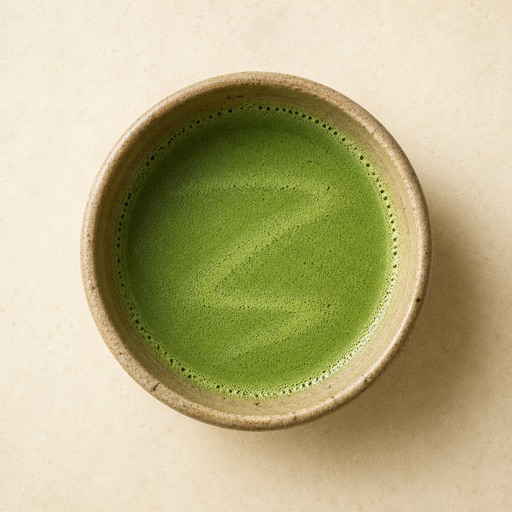
Technique diverges as sharply as the ratio. Usucha is whisked: after sifting the powder into the bowl and adding water, you move the chasen briskly in a light W or M pattern, keeping the tines just off the bottom, until a fine, even foam forms. Aim for small, uniform bubbles rather than a bubble bath — a finishing pass with the whisk barely touching the surface pops the large bubbles and leaves the crema-like layer that makes usucha soft on the palate.
Koicha is never whipped to a foam. It is kneaded: the chasen moves slowly, in deliberate circles and figure-eights, folding the small amount of water into the powder until the two become a single glossy, lump-free liquid. There should be no bubbles at all. Rushing this stage is the most common koicha mistake — the paste needs time to hydrate evenly, and many practitioners add the water in two stages to help it along.
What water temperature does each preparation need?
Both preparations want water well below boiling. The widely accepted window sits around 60–80 °C: hot enough to develop aroma and texture, cool enough to avoid scalding the leaf and dragging out harsh, astringent notes. Because koicha is so concentrated, most tea people steer toward the lower-to-middle part of that range for it; bitterness that would be a mild edge in usucha becomes overwhelming at koicha strength. If you have ever wondered why the same tin tastes gentle one day and aggressive the next, the kettle is the first suspect — our water-temperature guide covers the chemistry in detail.
Which matcha should you use for usucha and koicha?
Usucha is forgiving. A good everyday ceremonial-grade powder makes a lovely thin tea, and even a modest one can shine in a latte. Koicha is not forgiving at all. Because nothing dilutes the leaf, koicha is traditionally made only with the highest grades — powders with deep umami, natural sweetness, and minimal bitterness. Making koicha from a budget tin is a fast way to a very intense, very bitter experience. A practical home rule: if a matcha delights you as usucha with no sweetener, it is a candidate for koicha; if you only enjoy it in milk, it is not.
Which should you drink?
For most home drinkers, usucha is the daily practice: quick, light, and inexpensive per bowl. Koicha is worth trying at least occasionally, for two reasons. First, it is the most direct way to taste what a great matcha actually contains — concentration hides nothing. Second, tasting the same tin both ways teaches your palate faster than anything else. The umami you half-noticed in usucha becomes unmistakable in koicha; the bitterness you ignored becomes legible. Many people keep a modest tin for daily thin tea and a special one for occasional thick tea, opened only when the first is finished so neither goes stale.
If you do compare, write down what you find — which tin, which ratio, what you tasted. Memory flattens these differences within days, and a few honest notes are what turn random bowls into a developing palate. Our tasting-journal guide offers a simple vocabulary to get started.
What are the most common usucha and koicha mistakes?
- Skipping the sift. Matcha clumps from static and humidity. Sifting matters for usucha and is essential for koicha, where lumps have nowhere to hide.
- Eyeballing the powder. A "heaped scoop" can vary by a gram — a rounding error at usucha strength, a completely different drink at koicha strength. Weigh it.
- Boiling water. It scorches the leaf in both preparations and ruins koicha outright.
- Whisking koicha like usucha. Foam is a fault in thick tea. Slow down and knead.
- Using an old tin for koicha. Concentration magnifies staleness as much as it magnifies quality.
How Matcha Almanac helps
Matcha Almanac ships with thirty curated recipes that include usucha and koicha at correct ratios — each listing grams, milliliters, water temperature, whisk time, and step-by-step instructions, tested against ratios from Hugo Tea, Jade Leaf, Mizuba, and other respected sources. The guided brew timer walks through sifting, blooming, whisking, and finishing, and respects the 60–80 °C window. A ratio calculator handles hot or iced, latte or straight, at weak, medium, or strong intensity, and the journal records which preparation you made from which tin. Free, on-device, no account.