 Matcha Almanac
Quick answer: Once opened, matcha is at its best for roughly one to three months — stricter voices say the real vibrancy is gone within 30 days, more generous ones allow 60–90 days with careful storage. Properly stored matcha rarely becomes unsafe; it becomes boring, losing aroma first, then colour, then the sweetness that balanced its bitterness. Air, light, heat and moisture drive that fade, so keep matcha in an opaque airtight tin somewhere cool and dry, and buy tin sizes you can actually finish while they still taste good.
Matcha is stone-ground tea leaf with an enormous surface area, and from the moment a tin is opened it begins a slow, one-way conversation with oxygen, light, heat, and humidity. Unlike whole-leaf tea, which can shrug off months of casual storage, matcha fades on a timescale of weeks. Understanding that timeline — and the difference between "safe to drink" and "worth drinking" — will save you both disappointing bowls and wasted money.
Does matcha expire, or just go stale?
Sealed and stored cool and dark, an unopened tin typically carries a best-by date around a year out, and reputable vendors agree that properly stored matcha rarely becomes unsafe — it becomes boring. Old matcha will not usually make you ill; it makes a flat, dull, khaki-colored bowl. So the honest question is not "has it expired?" but "is it still the tea I paid for?"
On that question, vendor guidance clusters tightly: once opened, matcha is at its best for somewhere between one and three months. Some stricter voices say the real vibrancy is gone within 30 days; more generous ones say 60–90 days with careful storage. Almost nobody who sells or judges matcha professionally will defend an opened tin at six months as tasting the way it should.
How can you tell matcha has gone stale?
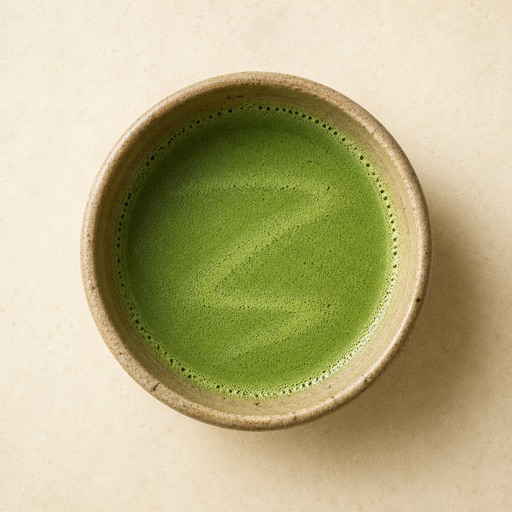
Degradation is gradual, but it follows a recognizable order. Aroma goes first — the fresh-grass, sweet-marine lift weakens noticeably within weeks. Color follows: chlorophyll oxidizes, and the electric spring green slides toward olive, then khaki, then a dull yellowish brown. Taste closes the sequence: the umami and natural sweetness thin out, and because the bitter compounds are more stable, the tea tastes progressively more bitter and flat relative to what remains. If you have been raising your kettle temperature or dose to "fix" a tin that used to taste great, the tin — not your technique — has probably moved on. (If a fresh tin tastes harsh, check your water temperature first.)
Quick signs a tin is past its prime
- Color: olive, khaki, or brownish rather than vivid green
- Aroma: faint, papery, or hay-like instead of fresh and sweet
- Foam: coarser, weaker foam that collapses quickly
- Taste: bitterness without the sweetness that used to balance it
- Texture: clumping from absorbed moisture (also a storage red flag)
How should you store matcha to keep it fresh?
Four enemies, four defenses:
- Air. Oxidation is the main driver of fading. Keep matcha in its original airtight tin or an opaque airtight container, press out excess air from pouches, and close it promptly — an open tin on the counter while you whisk is fine; an open tin all morning is not.
- Light. UV bleaches chlorophyll quickly. Opaque containers only; a glass jar on a sunny shelf is the fastest way to kill a beautiful green.
- Heat. Store cool. A cupboard away from the stove, kettle, and window beats any spot in the brewing splash zone.
- Moisture and odors. Matcha is hygroscopic and absorbs smells. Keep it sealed, away from spices and coffee, and never scoop with a wet spoon.
The refrigerator is a genuinely useful tool with one hard rule: condensation. Cold matcha meeting warm kitchen air sweats, and moisture ruins powder faster than time does. Refrigeration is excellent for unopened tins; for an opened tin you use daily, a cool dark cupboard is usually the safer trade. If you do refrigerate an opened tin, seal it inside a second airtight container and let it come fully to room temperature before opening.
What size tin of matcha should you buy?
The most effective freshness strategy happens at checkout, not in the cupboard. Buy tins sized to your actual pace: a 30 g tin lasts a two-grams-a-day drinker about two weeks — perfect. A bargain 100 g bag lasts the same drinker seven weeks at best, and the "savings" evaporate in the fade. Open one tin at a time, finish it, then open the next; two open tins age in parallel and both lose. If you keep a special-occasion matcha for koicha, keep it sealed until its moment. And note the opening date somewhere you will actually see it — memory is flattering, and "I opened this recently" is usually off by a month. Every stale gram is money quietly thrown away, a point our cost-per-cup guide makes in hard numbers.
What can you do with matcha that has faded?
Do not drink disappointment, and do not bin it either. Matcha that has lost its straight-tea sparkle still works beautifully where milk, sugar, or heat would mask subtlety anyway: lattes, smoothies, baking, ice cream. Demoting a faded "drinking" tin to kitchen duty and opening a fresh one for the bowl is standard practice among people who take matcha seriously — and it means nothing you bought goes to waste.
How Matcha Almanac helps
This whole problem — knowing what is open, for how long, and how fast you are using it — is exactly what Matcha Almanac's tin and pantry tracker exists for. Log each tin by brand, blend, grade, origin, and harvest date, and a freshness countdown shows when it approaches the 60, 75, and 90-day marks after opening. Grams remaining auto-deduct as you brew, so you can pace a tin to finish it at its best, and cost per bowl is computed from what you paid. Everything stays on your device: no account, no cloud, no tracking. Free, with optional Pro for unlimited active tins.