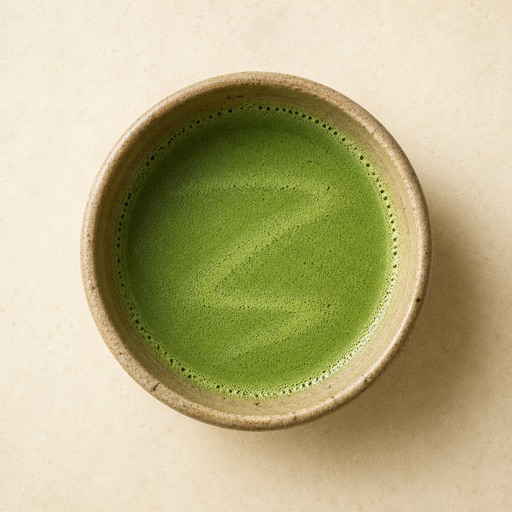
 Matcha Almanac
Quick answer: Most respected matcha sources converge on water of roughly 60–80 °C (140–176 °F), with 70–80 °C the everyday band for thin tea. Water fresh off the boil pushes the bitter catechins forward without gaining anything on the sweet, savoury amino-acid side, which is what makes a bowl taste harsh and chalky; above about 85 °C astringency dominates, while 60–70 °C gives the softest, most umami-forward bowl. You do not need a variable-temperature kettle: rest the boil for five to ten minutes, mix about one part room-temperature water with two to three parts boiling, or pour between vessels to shed degrees.
Ask why a bowl of matcha turned out bitter and you will hear theories about the brand, the grade, even the whisk. But the most common culprit never gets suspected: the kettle. Matcha is one of the most temperature-sensitive drinks you can make at home, and the difference between a sweet, savory bowl and a harsh one is often just twenty degrees of water. The good news is that the fix costs nothing and takes under a minute.
Why does hot water make matcha bitter?
Green tea leaf carries two families of compounds that pull a brew in opposite directions. L-theanine and related amino acids give matcha its savory-sweet depth — the brothy umami character that shade-grown tea is prized for. Catechins, the tea polyphenols, bring astringency and bitterness. Both are in every tin; temperature decides the balance you taste.
The savory amino acids express themselves readily even in relatively cool water. Bitter catechins, by contrast, come forward aggressively as the water gets hotter. Pour water fresh off the boil — 100 °C — and you push the bitter side of the leaf hard while gaining nothing on the sweet side. Tea people describe this as "scorching" the matcha, and the result is the aggressive, chalky-bitter bowl that convinces many beginners they simply do not like matcha. They usually do; they just have not tasted it brewed gently.
This effect is even more pronounced with matcha than with steeped green tea, because you are not straining leaves out — you drink the entire suspended powder. There is no filter between you and whatever the water extracted.
What temperature should matcha water be?
Most respected matcha sources converge on a working range of roughly 60 to 80 °C (140–176 °F), with many recommending the 70–80 °C band for everyday thin tea. Within that window, you can steer the result:
| Water temperature | Character | Good for |
|---|---|---|
| 60–70 °C | Softest, sweetest, most umami-forward; less aroma lift | High-grade tins, koicha, sensitive palates |
| 70–80 °C | Balanced sweetness and aroma, fine stable foam | Everyday usucha |
| Above ~85 °C | Bitterness and astringency dominate | Nothing — let the kettle cool |
Concentration raises the stakes. A slightly-too-hot usucha is a small flaw; the same water in koicha, which uses double the powder in half the water, produces something genuinely unpleasant. The finer and more concentrated the preparation, the more the low end of the window rewards you.
How do you hit the right temperature without a fancy kettle?
A variable-temperature kettle is convenient, not necessary. Three reliable low-tech methods:
- Rest the boil. Water off the boil in an uncovered kettle drops surprisingly fast. Depending on volume and room temperature, five to ten minutes of resting typically lands boiled water in the high-70s. Once you have timed it for your kettle, it is repeatable.
- Split and mix. Combining roughly one part room-temperature water with two to three parts boiling water lands near 75–80 °C. Adjust the ratio once with a kitchen thermometer, then trust it.
- Warm the bowl first, then pre-cool the water. Pouring boiling water into a second vessel (or the warming bowl itself) sheds several degrees per transfer. Each pour between vessels drops the temperature meaningfully — a traditional trick that needs no gadgets.
One inexpensive kitchen thermometer, used two or three times, calibrates all of these forever. After that, you can work by routine.
Can you make matcha with cold water?
Temperature sensitivity cuts both ways: matcha whisks readily into cold water, and cold preparation suppresses bitterness almost completely while keeping the amino-acid sweetness intact. This is why iced matcha made from a middling tin often tastes smoother than the same tin served hot. The trade-offs are a thinner foam and a more muted aroma. For summer drinks, iced lattes, and delicate powders, cold or cool water is a legitimate technique, not a shortcut.
What else makes matcha taste bitter?
If your matcha is bitter even with careful water, check three things before blaming the leaf. First, dose: too much powder for the water volume concentrates catechins along with everything else — weigh, don't scoop. Second, grade and purpose: culinary-grade matcha is blended to punch through milk and sugar, and drinking it straight will taste rough at any temperature. Third, freshness: oxidized, stale matcha loses sweetness and aroma first, which leaves bitterness relatively louder — a tin open for many months will never taste like it did in week one. Our freshness guide explains how quickly that fade happens and how to slow it down.
Is there one perfect matcha temperature?
There is no single magic temperature — a delicate spring-harvest powder and a robust everyday blend genuinely want different water. What matters is consistency: brewing the same tin at a known temperature, tasting, adjusting by five degrees, and remembering the result. Two or three deliberate iterations will find any tin's sweet spot. The failure mode is randomness — a different, unmeasured temperature every day, which makes learning impossible.
How Matcha Almanac helps
Matcha Almanac's guided brew timer respects the 60–80 °C window that protects L-theanine, and every one of its thirty recipes states its water temperature alongside grams, milliliters, and whisk time — with ratios tested against Hugo Tea, Jade Leaf, Mizuba, and other respected sources. The multi-step ring walks through sifting, blooming, whisking, and finishing, keeps running if you switch apps to grab the kettle, and ticks with quiet haptics. The journal records your tasting notes for each brew so the "adjust by five degrees" experiment actually accumulates. Free, on-device, no account.