 Tomoshibi
Quick answer: Trataka is a yogic gazing practice — the word means “to look” — in which you sit comfortably with a flame at eye level about an arm’s length away in a dim room and rest your gaze on it. A flame works well as a focus object because it is a single point, it moves gently rather than staying static, and its warm dim light is restful in a way a bright screen is not, producing the effortlessly held attention researchers call soft fascination. Start with two to five minutes, blink whenever you need to, and treat noticing that your mind wandered and returning to the flame as the exercise itself; it is a focus and relaxation practice rather than a therapy, so ease off and speak to a qualified professional if you have eye conditions, light sensitivity, or persistent difficult feelings.
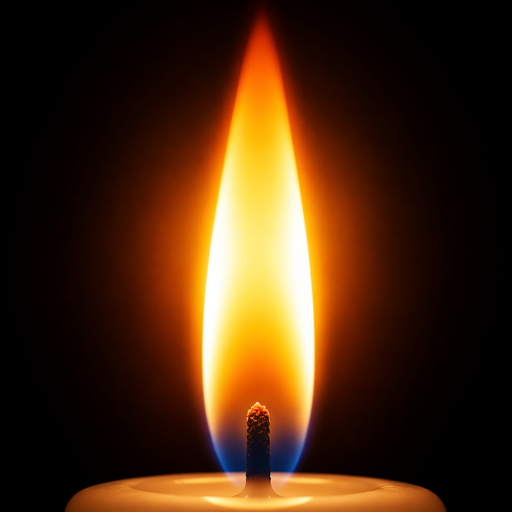
Long before meditation apps, people meditated on fire. In the yogic tradition the practice is called trataka — literally “to look” or “to gaze” — and in its most common form it is beautifully simple: sit comfortably, place a candle at eye level, and rest your gaze on the flame. That’s the whole instruction. What happens next is what has kept the practice alive for centuries.
Why gaze at a flame, of all things?
Most beginners who try to meditate with closed eyes discover the same problem: the mind treats darkness as a blank canvas and immediately starts painting on it — to-do lists, replayed conversations, tomorrow’s worries. An open-eyed practice sidesteps that by giving attention a home. And a candle flame happens to be an almost perfect home for attention:
- It is a single point. Unlike a window or a screen full of elements, a flame gives your eyes exactly one place to be. There is nothing to scan, compare, or choose between.
- It moves, but gently. A completely static object quickly becomes boring, and boredom invites the mind to wander. A flame’s soft, irregular flicker is just lively enough to keep the eyes engaged without stimulating them the way scrolling content does.
- It is warm and dim. Candlelight sits at the far, warm end of the light spectrum. Gazing at it is restful in a way that staring at a bright, cool screen never is.
- It carries meaning. Across nearly every culture, a small flame signals stillness, reverence, or safety. You bring that association with you before the practice even starts.
This combination — one point, gentle motion, warm light — produces the state attention researchers sometimes call soft fascination: attention that is held effortlessly rather than gripped. Watching waves and watching a fire both live in this zone. It is a restful mode for a busy mind, and it is exactly the mode trataka cultivates deliberately.
How do you practise candle gazing?
- Set up. Sit comfortably — chair or floor — with the flame roughly at eye level and about an arm’s length away, in a dim room. The flame should be the brightest thing in your field of view.
- Settle. Take a few slow breaths. Let your shoulders drop. Decide how long you will sit — two to five minutes is plenty at first.
- Gaze. Rest your eyes on the flame, ideally at the steady blue-to-gold region just above the wick. Keep your gaze relaxed: you are not staring a hole through the candle, you are letting the flame sit in your vision.
- Blink naturally. Traditional instructions emphasize minimizing blinking, but beginners should blink whenever they need to. Comfort first — dry, watering eyes will end the session early and teach you nothing.
- Return. When you notice your mind has wandered (it will), gently bring your gaze and attention back to the flame. That return — not an empty mind — is the exercise.
- Close. Many practitioners end by closing their eyes and watching the flame’s afterimage float in the dark until it fades. It is a naturally quiet way to finish.
What mistakes do beginners make?
Trying too long, too soon
Five focused minutes beat thirty restless ones. Trataka is a practice of quality of attention, not endurance. Lengthen sessions only when the current length feels genuinely easy.
Staring instead of gazing
If your eyes burn or your face tenses, you are efforting. Soften the eyes, widen your peripheral awareness slightly, and let the flame come to you.
Fighting every thought
Thoughts are not failures; they are the raw material. Each time you notice one and come back to the flame, you have done one “repetition” of the actual skill being trained.
A flame that misbehaves
A real candle in a drafty room gutters, smokes, and dances wildly — which turns a focus practice into a distraction machine. Traditional guidance says to practice with a windless flame. If your space can’t provide one, a steady artificial flame is a practical substitute.
When and where should you practise?
Trataka pairs naturally with the edges of the day. In the evening, a short session can serve as a boundary ritual between screen time and sleep — a dim, warm signal that the day’s inputs are over. In the morning, it can be a gentler alternative to reaching for your phone. There is no wrong time; consistency in the same time and place is what builds the habit.
One honest note: candle gazing is a focus and relaxation practice, not a therapy. If you experience eye conditions, light sensitivity, or if difficult feelings surface persistently during quiet practices, ease off and speak with a qualified professional.
How Tomoshibi helps
Tomoshibi includes a dedicated Meditation mode built for trataka: a steady, unwavering flame that never gutters or smokes, on a true black background with nothing else in view. Set a sleep timer for your session length, let the gyroscope rest (the meditation flame stays still by design), and practice in complete silence or with a single soft sound like singing bowls. There are no ads and no notifications to break your gaze — and the optional minutes tracker keeps a private, on-device record of your practice.